Picture Hanging in Toronto Condos: Level, Secure, and Damage-Aware
Hanging pictures and art in a Toronto condo sounds simple. Getting them level, properly anchored, and centred takes more than a nail and a hammer.
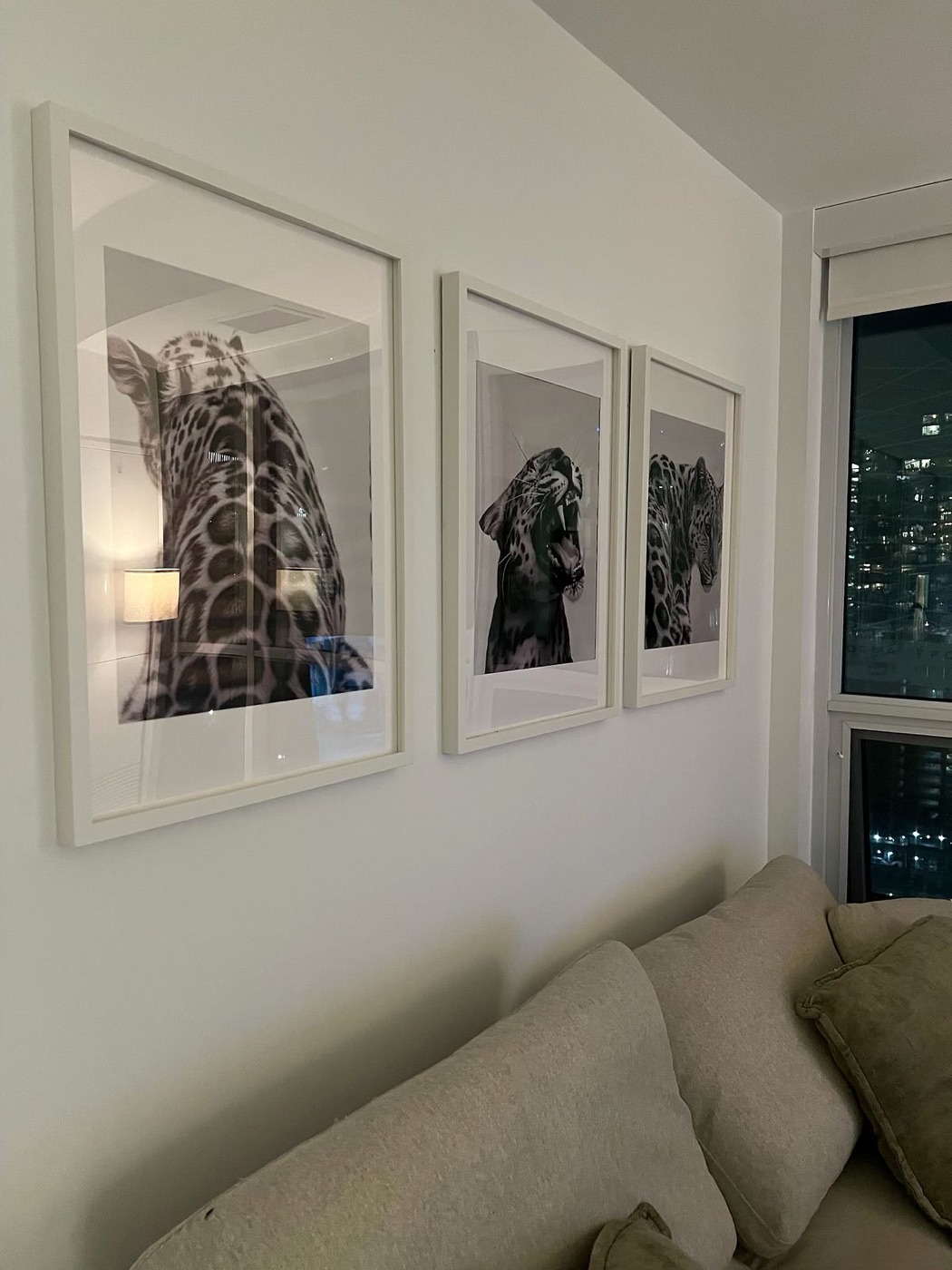
- Use a laser level for groups of three or more frames — a ruler and eye-balling gets off-track fast
- Wire-hung frames shift over time — d-ring hardware stays put
- Plaster walls (common in older buildings) need different anchors than drywall
- Gallery walls with 6+ pieces: lay it out on the floor first before marking the wall
Single Frame vs. Gallery Wall
A single large frame or artwork is usually straightforward: find the right anchor for the wall type, mark the hanging point, drive the anchor, hang. The complexity scales quickly with multiple pieces — a gallery wall with 8–12 frames has to be laid out carefully or the spacing and alignment will be off.
For single frames over 40 lbs (large canvases, heavy mirrors with frames), use two anchor points rather than one central wire. Two-point hanging keeps the frame stable and reduces the chance of the wire sliding sideways.
Hardware Types
Wire hanging is common on purchased frames but it's the least stable option — the wire can slide left or right, and the frame slowly tilts over months. D-ring hardware mounted at two points on the back of the frame is more stable. French cleats are the most secure option for heavy pieces.
For command strips: rated for smooth surfaces and low-humidity environments. In a bathroom or near a kitchen, the adhesive fails faster. For art that costs more than $50, use a real anchor rather than command strips.
Wall Types
Older downtown Toronto buildings (pre-1980) often have plaster walls rather than drywall. Plaster is harder, more brittle at the surface, and cracks if you drive a nail without drilling a pilot hole first. Use a screw with a plastic anchor — not a nail — in plaster.
Concrete walls need a masonry bit and a sleeve anchor or a concrete screw. For picture frames (typically light loads), a concrete screw with a hammer drill works well and leaves a smaller hole than a sleeve anchor.
Centring and Level
For a single piece, centring over a sofa or bed means measuring the furniture width and finding the midpoint, then hanging the art centred on that point at the right height (typically 57–60 inches to the centre of the piece, or 6–8 inches above the furniture).
For groups of frames, a laser level is far more reliable than measuring each point individually. Project the level line across the wall, mark the hanging points along it, then verify with a tape measure before drilling. A 2-degree tilt that's invisible on a single frame becomes obvious across five frames in a row.
Need help in downtown Toronto?
Flat $30/hr. Assembly, mounting, repairs. Pay only after the work is done.