IKEA LACK Wall Shelf Installation in Toronto Condos
The LACK shelf looks simple but the installation — especially in Toronto condos with concrete or drywall-over-concrete walls — requires the right anchor strategy to get it level, solid, and load-bearing.
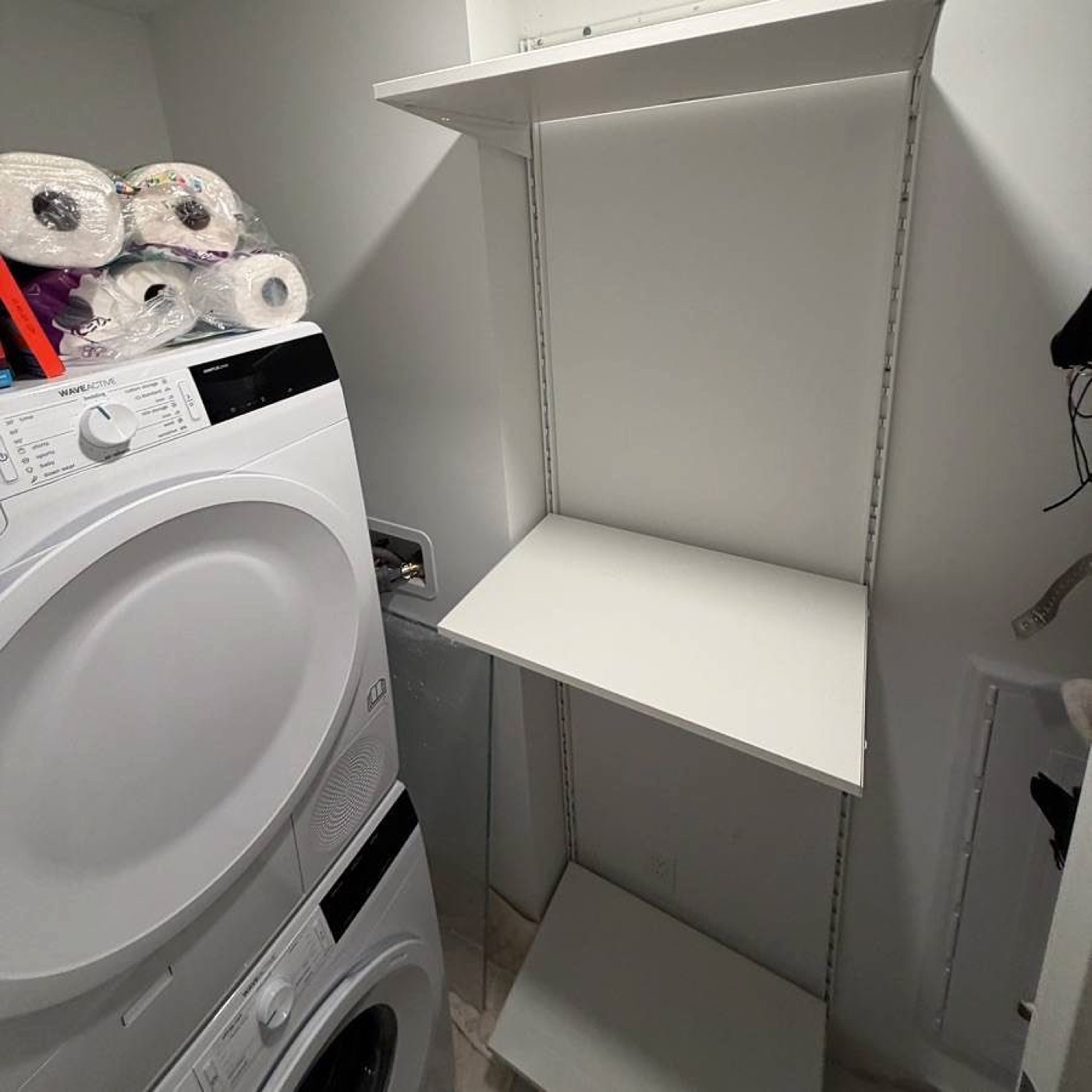
- LACK uses concealed bracket pins — they must be perfectly level or the shelf won't sit flat
- Many Toronto condo walls are concrete behind drywall — a magnet stud finder won't work on these
- The 110cm LACK is rated for 15kg — don't treat it as a heavy storage shelf
- Multiple LACK shelves in a column: measure and mark all positions before drilling the first hole
LACK Mounting Hardware Overview
The IKEA LACK wall shelf mounts using hidden bracket pins that insert into holes pre-drilled in the back of the shelf. The wall bracket is an L-shaped plate that screws to the wall; the bracket pins then slot into the shelf holes from behind. This gives a "floating" look with no visible hardware. The challenge: the bracket pins must be exactly horizontal and exactly the right distance apart for the shelf to sit level and fit properly.
IKEA includes a paper template for marking the hole positions. This template is the right way to do it — fold the template on the center line, tape it to the wall at the desired height, mark the holes, remove the template, drill. The template removes most of the measurement error. I always use it, even when I've done dozens of these shelves and know the measurements by heart — it's faster than measuring manually.
Stud-Finding in Toronto Condos
Downtown Toronto condos built in the 2000s and later typically have interior partition walls built from metal stud framing with 5/8" drywall on each side. Metal studs are hollow and don't provide the same anchor strength as wood studs. For a LACK shelf rated at 15kg, a proper toggle anchor in drywall is usually sufficient — no stud needed.
However, some older Toronto buildings (pre-1990, particularly in the Annex, Cabbagetown, and Riverdale) have plaster walls over wood lath, or drywall over solid masonry. For these walls, the stud-finding approach is different: in plaster-over-masonry, there are no studs — the anchor goes directly into masonry behind the plaster. A rare-earth magnet or an electronic stud finder set to AC detection can help identify what's behind the wall.
Concrete and Masonry Walls
Many Toronto condo exterior walls and some demising walls (walls between units) are poured concrete with a thin drywall fur-out on the interior face. This is extremely common in CityPlace, Liberty Village, and similar developments. The drywall is typically only 12mm (1/2") with a 1–2cm air gap before concrete. Standard drywall anchors won't work — they rely on the drywall being thick enough for the toggle to deploy behind it.
For concrete walls, the right approach is to drill through the drywall and the air gap and anchor into the concrete with a concrete screw (tapcon) or plastic masonry anchor and bolt. This requires a hammer drill and the correct masonry bit size (typically 6mm for a 3/16" tapcon). The result is a solid anchor that will outlast the shelf and the building.
Condo tip: When you drill into a concrete condo wall, use masking tape to mark the depth on the drill bit — typically 35–40mm into concrete. Drill slowly with the hammer action engaged. Remove dust from the hole before inserting the anchor.
Leveling and Spacing Multiple Shelves
For a single LACK shelf, leveling is straightforward: use a digital level on the template before drilling, or use a bubble level on the shelf after installation and adjust. For a column of multiple LACK shelves, measure and mark all positions before drilling anything. Start from the top shelf position (or the most constrained one — near an outlet, above a specific item) and work down, measuring the gaps between shelves consistently.
A common mistake: mark and install one shelf, then measure from it to the next. Any level error in the first shelf compounds in subsequent ones. Mark all shelf heights from the floor (or from a laser level line) before starting installation.
Need LACK shelf installation in Toronto?
$30/hr. A pair of LACK shelves usually takes 30–45 min including leveling. Pay after the job.